
What Every Property Owner Should Know About Mold Testing
You can ignore a dripping faucet for a few days. You can ignore a squeaky door for months.
Mold doesn’t usually give you that kind of patience.
The U.S. Environmental Protection Agency (EPA) reports that mold can begin growing within 24 to 48 hours after moisture appears. That’s a surprisingly short window when you think about how many leaks stay hidden behind walls, under sinks, inside attics, or beneath flooring.
That is one reason mold testing has become such a valuable tool for homeowners, landlords, real estate investors, and commercial property owners. It helps answer important questions before assumptions turn into expensive repairs.
Mold Is Less Picky Than Most People Think
Many people picture mold as something that only shows up in neglected buildings or after major flooding. In reality, mold has much lower standards.
A tiny plumbing leak, a humid crawl space, condensation around HVAC equipment, or a roof leak; all these are just slow enough to stay unnoticed. Any of these situations can create conditions that encourage mold growth. That’s why mold testing for property owners is a must.
The Centers for Disease Control and Prevention (CDC) points out that mold is found virtually everywhere, both indoors and outdoors.
Mold spores are constantly moving through the air around us. The challenge isn’t keeping mold out of a property. The challenge is preventing moisture from giving it a place to settle and grow.
For property owners, that distinction matters. It means mold can develop in newer homes, older homes, office buildings, retail spaces, and rental properties alike, and you likely won’t find out until you get testing done.
How Mold Affects Your Health
In short, yes. According to the EPA, exposure to mold may contribute to irritation of the eyes, nose, throat, skin, and lungs. Individuals with allergies, asthma, or respiratory sensitivities may be particularly affected by mold exposure.
Sometimes Mold Is Easy To Spot
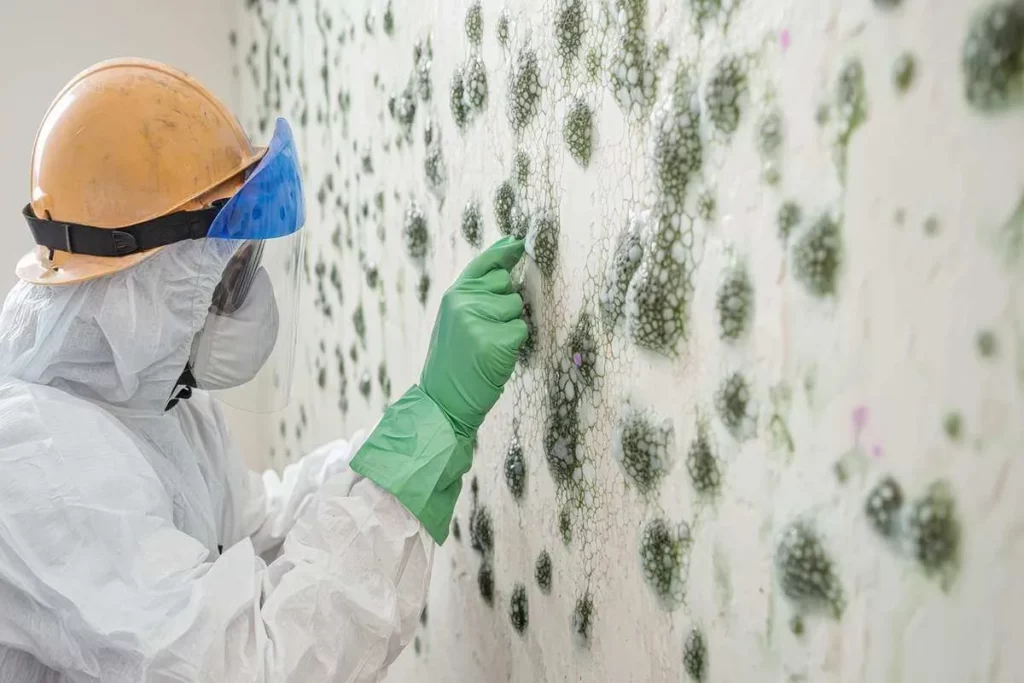
Sometimes you will see physical manifestations of mold. A patch of discoloration on drywall is fairly obvious, or a musty smell in the basement can raise suspicions.
Maybe you have water stains on the ceiling that often point toward a moisture issue.
The tricky situations are the ones hiding out of sight.
Mold can grow behind walls, beneath flooring, inside attics, around ductwork, and within crawl spaces where property owners rarely spend time. In many cases, the visible mold is only a small piece of a larger issue.
That is one reason professional mold testing often focuses just as much on moisture detection as mold itself.
Finding the source of the moisture is often more important than finding the mold.
What Does Mold Testing Actually Tell You?
Some property owners assume testing simply confirms whether mold exists. If only it were that simple.
Professional testing can help answer questions such as:
- Are indoor mold levels elevated?
- Is there evidence of hidden moisture?
- Are certain areas showing signs of contamination?
- Could indoor air quality be affected?
- Is further investigation recommended?
A proper mold testing helps property owners understand what is happening inside the property and whether additional action may be needed.
Real Estate Transactions And Mold Concerns
When purchasing real estate, buyers want confidence that they understand the property’s condition. Sellers often want the same confidence before putting a property on the market.
Mold testing for property owners can provide valuable insight during these situations. Testing may help identify moisture-related concerns that warrant further evaluation before negotiations, repairs, or closing discussions proceed.
No one enjoys surprises during a real estate transaction, especially the expensive kind.
The Moisture Problem Is Usually The Bigger Story
Here’s something that surprises many property owners.
Mold is often just the symptom. Moisture is usually the actual problem.
The EPA consistently highlights that controlling moisture is the most effective way to control mold growth. Removing visible mold without addressing the underlying water source often allows the problem to return.
Think about it this way.
If a bucket keeps overflowing, mopping the floor helps for a little while. Turning off the water solves the actual problem.
Common moisture sources include:
- Roof leaks
- Plumbing leaks
- Poor ventilation
- Foundation moisture intrusion
- Crawl space humidity
- HVAC condensation
- Water damage from storms
A thorough assessment helps identify these contributing factors so property owners can focus on long-term solutions.
What Happens If Mold Is Found?
Sometimes testing confirms that mold levels are within expected ranges. Sometimes it identifies a localized issue that can be addressed relatively easily.
Other situations may require more extensive remediation.
The important thing is that property owners are working with facts instead of assumptions.
Information gives people options.
Without mold testing, decisions are often based on guesses. With testing, decisions are based on actual findings.
Why Waiting Rarely Helps
The problem is that moisture problems rarely solve themselves.
The longer moisture remains present, the more opportunity mold has to spread and affect building materials.
That’s why early testing can be so valuable. Small concerns are often easier to address than larger ones discovered months later.
Wrapping Up
Professional mold testing offers a clearer picture of what’s happening behind walls, beneath floors, and inside areas that don’t get much attention during everyday life.
If you have concerns about moisture, indoor air quality, or potential mold growth, contact HomePro Chesapeake Home Inspections.
Our team provides professional mold testing services to give you the answers you need.


