
Do You Need Radon Testing Before Buying a Home in Annapolis, MD
Quick Answer
Annapolis sits on uranium-rich soil that leaks cancer-causing radon gas directly into homes through foundation cracks. Getting a radon test before buying catches high radiation levels early, allowing you to force the seller to pay for a mitigation system before you close.
One out of every fifteen homes in the United States has high radon levels. In some parts of Maryland, that number is even higher. If you are buying a home, you might be moving into a space with the same radiation exposure as a nuclear site.
The good news is that you can find this out before you sign a single paper.
This blog will show you how to protect your family from a silent killer. You will learn how to save money on repairs and gain the upper hand in your home purchase.
Why Radon Testing in Annapolis, MD is Non-Negotiable
Annapolis is a beautiful place to live, but its geology hides a dirty secret. The soil in our area contains pockets of uranium that naturally decay over time. As it breaks down, it turns into radon gas, which rises through the ground.
Your new home acts like a giant vacuum, sucking this gas through cracks and pipes. The Maryland Department of Health regularly tracks these levels across different counties. You can view the latest local data and health risks on the Maryland Department of the Environment (MDE) Radon Information.
Many people assume a brand new home is safe from these issues. Well, this assumption can cost you thousands of dollars. Every house is different, and the only way to know the truth is through a test.
Annapolis sits within the Atlantic Coastal Plain, where shifting layers of sand, clay, and gravel interact with a high regional water table. Whether your home features a full sub-grade basement or a vented crawlspace, these foundations are rarely airtight.
Unsealed sump pump pits, plumbing penetrations, and porous concrete foundation walls provide direct pathways for soil gas to enter, making localized testing essential regardless of how close you are to the Bay.
Lessons from the Iowa Radon Lung Cancer Study
For years, scientists debated exactly how dangerous indoor radon really was. The Iowa Radon Lung Cancer Study finally gave the world a definitive answer. Researchers tracked 413 lung cancer patients and 614 control subjects over two decades.
The findings established that prolonged exposure to even moderate residential radon levels significantly increases health risks, making radon the leading cause of lung cancer in non-smokers.
Radon risk isn’t tied to home value or aesthetic condition; it’s purely a function of soil airflow and foundation sealing.
What Happens During a Professional Radon Test
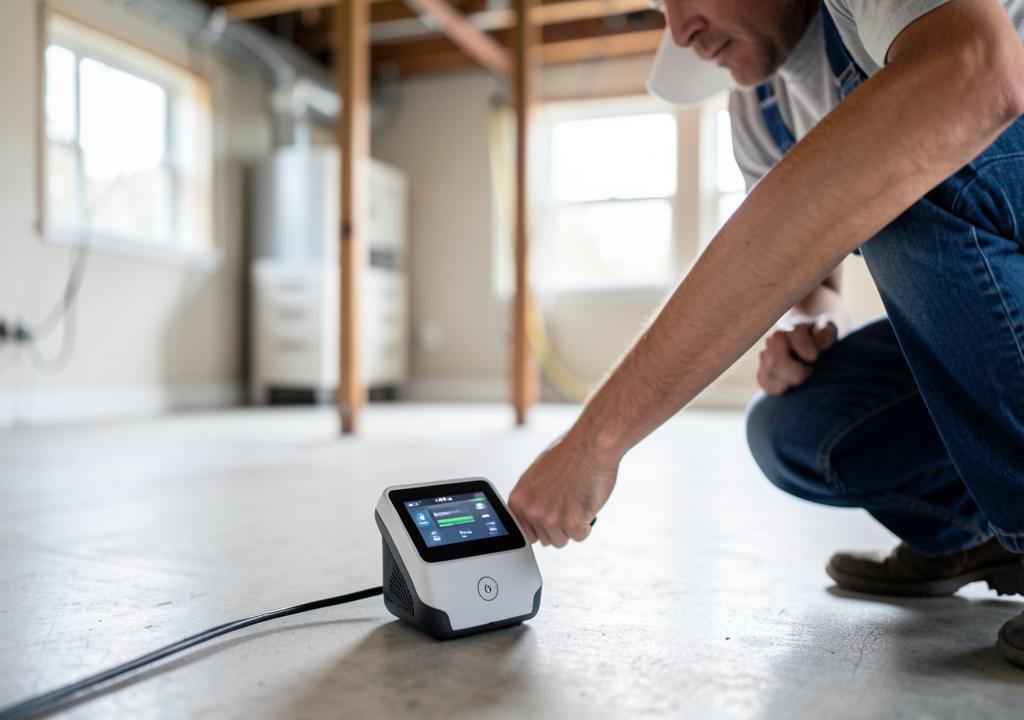
Most local buyers now realize that radon testing in Annapolis, MD is just as important as checking the roof or the plumbing. An inspector places a calibrated monitor in the lowest part of the house. They leave it there for a few days to get a clear picture of the air quality.
To get an accurate result, there are specific rules that everyone must follow:
- All windows and outside doors must remain closed during the entire test.
- The monitor must stay in place and cannot be moved or covered up.
- Fans that bring in outside air should be turned off for the duration.
- The test must last for at least 48 hours to account for daily shifts in gas levels.
Once the test is over, you receive a report with a specific number. This number tells you exactly how much radiation is in every liter of air. If the number is high, you can then move to the next phase of your negotiation.
In the Annapolis area, marine weather systems and passing nor’easters cause rapid drops in barometric pressure. This atmospheric shift acts like a giant vacuum, accelerating radon gas out of the soil and into your home.
A professional 48-hour test using a Continuous Radon Monitor (CRM) tracks these hourly weather-driven spikes, ensuring you get an accurate picture of your true radiation exposure rather than a misleading snapshot.
Use the following table as your reference point.
| Radon Level (pCi/L) | Risk Level | Recommended Action |
| Below 2.0 | Low | No immediate action needed. Retest after 2-5 years |
| 2.0 to 3.9 | Moderate | Consider installing a mitigation system to lower levels further |
| 4.0 and Above | High | Fix the home immediately before or after closing |
Managing Your Risks and Your Budget
Dealing with these risks during the inspection period keeps your bank account safe. It turns a potential health hazard into a simple line item on a repair list. You deserve a home that is both healthy and affordable from day one.
Who Pays for the Fix
If a test shows high levels, you should not panic or walk away immediately. Usually, the buyer asks the seller to cover the cost of a mitigation system. This keeps the repair costs off your plate and ensures the house is safe before you move in.
The Value of Your Investment
A house with a certified mitigation system is often easier to sell in the future. Modern buyers are much more aware of health risks than they were a decade ago. Addressing the issue now adds a layer of security to your long-term investment.
Simple Installation
Installing a radon system is a straightforward process for a professional. They use a pipe and a fan to vent the gas from under the slab to the outside air. It does not require major renovations or tearing down walls.
The Financial Advantage of Testing Early
Buying a house is expensive enough without having to pay for unexpected repairs. If you find out about a radon problem after you move in, you are stuck with the bill. A radon test before buying a home is a small price to pay for that information.
Most mitigation systems cost between $900 and $3,000. If you find the problem during the inspection period, that money stays in your pocket. The seller is the one responsible for providing a house that meets safety standards.
The EPA provides great resources on why these standards are so important. You can look at the EPA Citizen’s Guide to Radon. Information is your best friend when you are making a massive financial commitment.
Protect Your Family with Reliable Information
Do not leave the health of your family up to chance. A home is where you should feel the most secure, not where you face a hidden danger. Getting a test gives you the facts you need to make a smart, informed decision.
Maryland geology is complex, and maps can only tell you so much. The only way to be 100% sure is to test the specific air inside the home you want to buy. Take this simple step now to avoid a major headache and a health risk later.
Secure Your Future with Professional Testing
Choosing the right inspector is the final piece of the puzzle. You need someone who understands the local landscape and the latest testing technology. Having a clear report in your hands gives you the power to negotiate with total confidence.
HomePro Chesapeake Home Inspections is a professional home inspection company. We provide expert radon testing in Annapolis, MD to help you move forward with your purchase. Our crew uses modern gadgets to confirm exactly what is in your air. Call us to book your inspection and get the real facts about your house.


